Tangential flow filtration for bioprocessing
How TFF concentrates product and exchanges buffer without compromising the molecule. Start with the half of the decision most teams overlook, then follow the guides at your level.
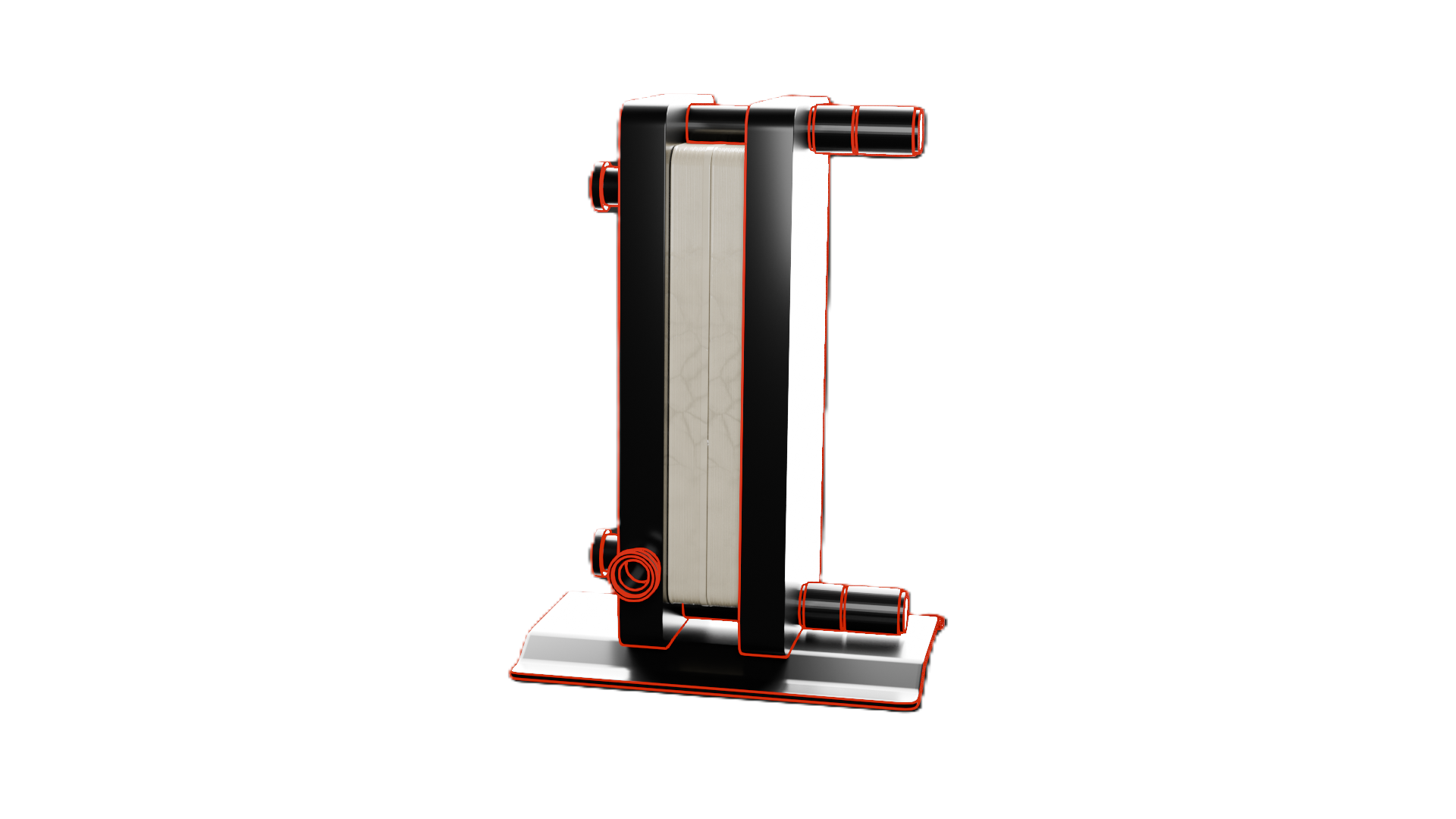
Choosing a TFF system means choosing a membrane (what separates) and the equipment that drives it (what moves and controls the fluid). Most teams optimize the first. For fragile biologics, the second is what decides yield.
The membrane
What separates the product from everything else.
Material & MWCO
What the membrane is made of, and its molecular cutoff.
Cassette or hollow fiber
The format that houses the membrane.
Surface chemistry
How the surface interacts with the product.
Fouling resistance
How long it stays productive before it blocks.
The equipment
What moves and controls the fluid across the membrane.
Pump architecture
What recirculates the product, and how much shear it adds.
TMP stability
How steady the transmembrane pressure stays.
Valve & control
How precisely the system holds its setpoint.
Scale-up & hold-up
Whether hardware stays the same across scales, and how much product is trapped.
Membrane selection gets most of the attention. The equipment is the other half, and for fragile biologics it is what decides yield.
Three paths through the same discipline. Start where you are, and go as deep as the process demands.
The essentials
Crossflow, formats, and when to use TFF.
Yield and pressure
What TFF costs you, and the pressure stability behind it.
Scale and edge cases
Scale-up, fragile vectors, and sizing math.

What is tangential flow filtration (TFF)?
In TFF the feed flows parallel, or tangential, to the membrane while permeate passes through and retentate recirculates. The crossflow sweeps the membrane surface to limit fouling, unlike dead-end filtration where the feed drives straight into the membrane. TFF is used for concentration (ultrafiltration) and buffer exchange (diafiltration).
What is transmembrane pressure (TMP) and how is it calculated?
TMP is the average pressure that drives liquid through the membrane: TMP = ((Pfeed + Pretentate) / 2) − Ppermeate. Its stability matters as much as its value, because pump pulsation makes TMP swing, which drives fouling and flux decline over a run.
How does pump pulsation affect TFF performance?
In TFF, transmembrane pressure drives permeate through the membrane. Pump pulsation makes TMP oscillate with every cycle: the peak pushes product into membrane pores and the trough lets fouling consolidate. A peristaltic pump typically produces 5 to 15 PSI of variation. Below about 1 PSI, flux is more stable and fouling progresses more slowly. This is why pump architecture, not just membrane selection, determines TFF run performance.
Why does TFF matter for fragile biologics?
Viral vectors, LNPs, and cell therapies recirculate through the system hundreds of times in a single run. Pump shear, cavitation, pulsation, and dead volume can each cause significant yield loss in viral vector TFF. For these products, equipment choice is as important as membrane choice.
Processing a fragile biologic? Let's talk through your TFF step.
Talk it through with our engineers