Bioprocessing pumps: how architecture drives shear
How bioprocessing pumps move fluid, and what that does to the molecule on the way through. Start with why a pump is never just a flow rate, then follow the guides at your level.
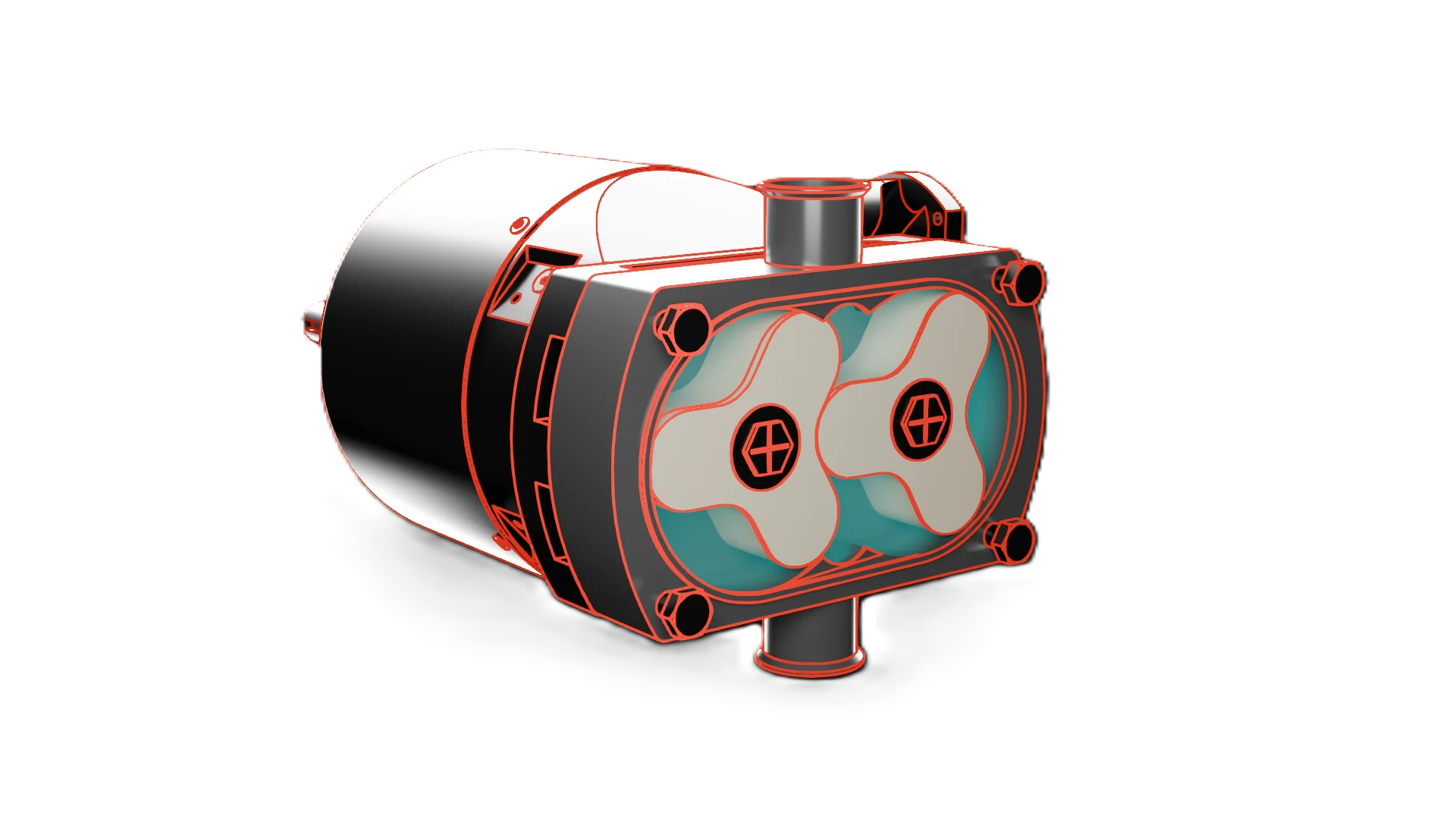
In a recirculating step, every molecule of product passes through the pump, often hundreds of times in a single run. The architecture, not the number on the datasheet, decides what reaches the molecule on the way through. These are the four things a pump can do to it.

Shear
Tubing compression and impeller contact each shear product differently. The mechanism matters more than the flow rate.
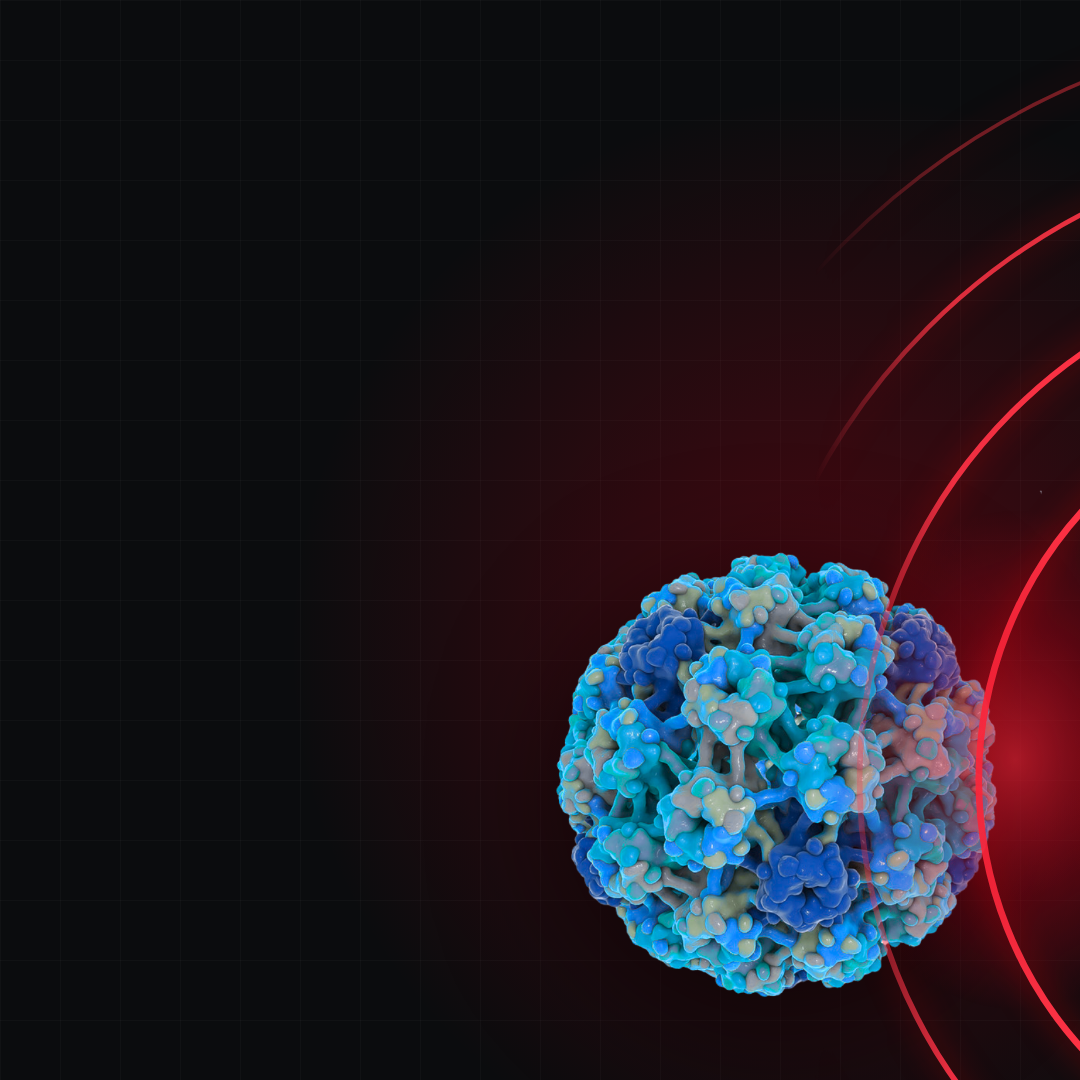
Pulsation & harmonics
Pressure fluctuation propagates through every downstream unit operation. Odd diaphragm counts cancel it; even counts reinforce it.
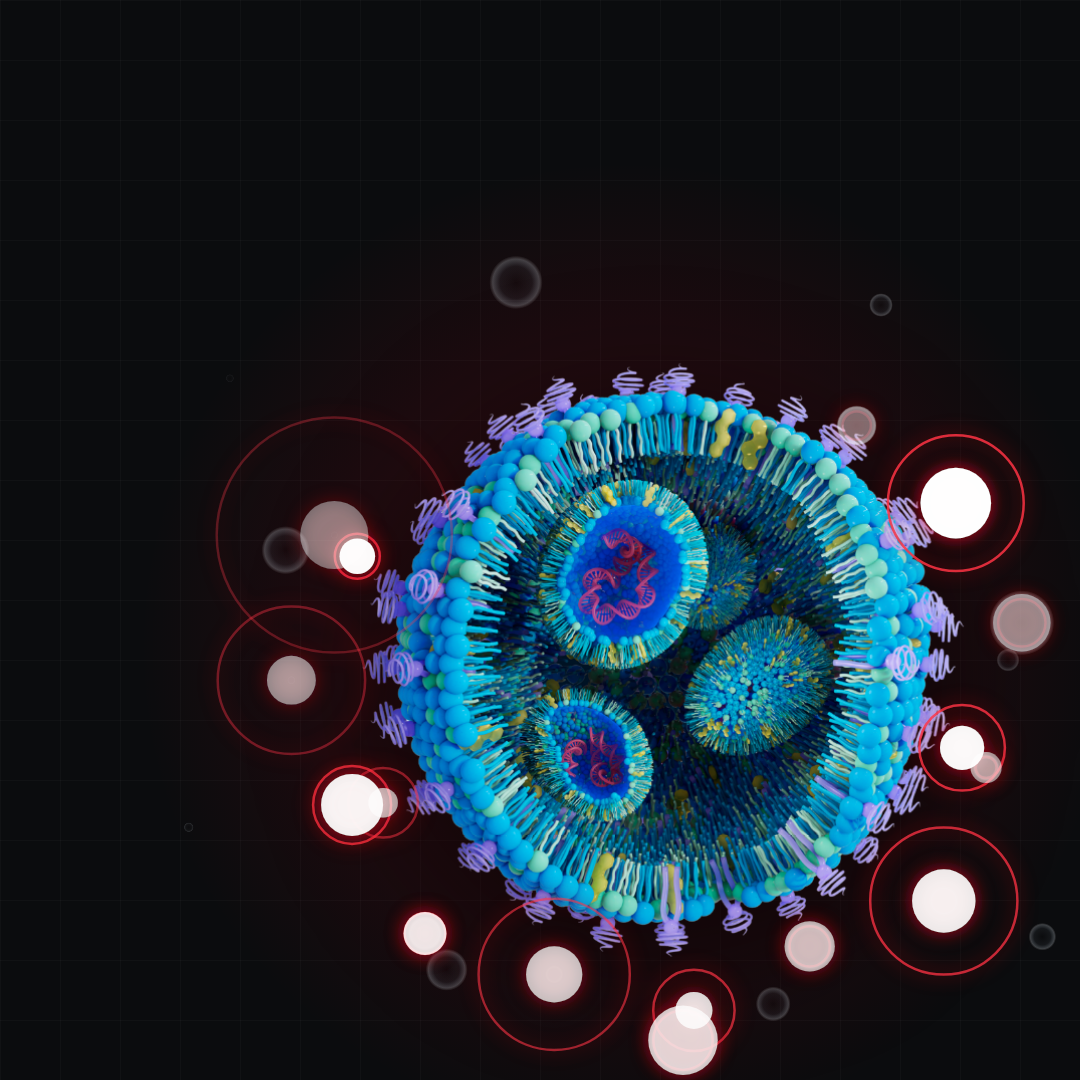
Cavitation
When inlet pressure drops below vapor pressure, the fluid boils. Collapsing bubbles generate shockwaves that denature protein. Gravity-flooded designs avoid it.
Viscosity response
Most pumps lose flow as viscosity rises. Quaternary (even) diaphragm designs begin to degrade around 500 cP and stall well before 1,000 cP; radial positive-displacement designs hold flow to roughly 3,000 cP under defined conditions.
Two pumps rated for the same flow rate can do very different things to your product. The architecture is what reaches the molecule, not the number on the datasheet.
Three paths through the same discipline. Start where you are, and go as deep as the process demands.
Start with the mechanisms
How each pump architecture moves fluid.
Damage and diagnosis
How pumps damage product, and how to spot it.
Physics and design
Harmonics, viscosity limits, and cavitation physics.
What types of pumps are used in bioprocessing?
The main types are peristaltic, diaphragm (positive displacement), centrifugal, and rotary lobe. They differ in how they move fluid, which in turn sets the shear they impart, the pulsation they create, their cavitation risk, and how well they handle viscosity.
Why does pump choice affect product quality?
In recirculating steps such as tangential flow filtration, every molecule passes through the pump hundreds of times. Each pass is an exposure to the pump's damage mechanism, whether tubing compression, suction cavitation, or impeller shear. So the architecture, not the flow rate, drives aggregation, fragmentation, and yield loss.
Why does pump pulsation matter in bioprocessing?
Every positive-displacement pump creates pressure pulses that travel through the entire fluid path. In TFF, pulsation makes transmembrane pressure swing, pushing product into membrane pores on the peak and letting fouling consolidate on the trough; a peristaltic pump typically produces 5 to 15 PSI of variation. The same pressure wave unsettles chromatography resin-bed packing and blurs separation, and it adds noise to inline UV, conductivity, and pressure sensors, which destabilizes the control loops that depend on them. In a multi-diaphragm pump, an even number of heads fire in opposed pairs whose pulses reinforce, while an odd number staggers them so even-order harmonics cancel and the trace is measurably smoother. This is geometry, not a tuning parameter.
Which pump type is best for viral vector manufacturing?
For viral vectors the priorities are no tubing compression, no suction cavitation, and minimal pulsation. AAV capsids and enveloped viruses are more damage-sensitive than monoclonal antibodies, and a recirculating TFF step amplifies single-pass damage across hundreds of exposures, so a pump adequate for mAb TFF can cause meaningful yield loss with viral vectors.
Which pump is gentlest for fragile biologics?
As a rule, designs that avoid direct product contact, run gravity-flooded to prevent cavitation, and minimize pulsation are gentlest on the molecule. The right fit still depends on the product's sensitivity, the viscosity, and the flow the process requires.
Working through pump selection for a specific process?
Talk it through with our engineers