Valve engineering for bioprocessing
How valves control, contain, and direct flow. Start with the one distinction beneath every valve decision, then follow the guides at your level.
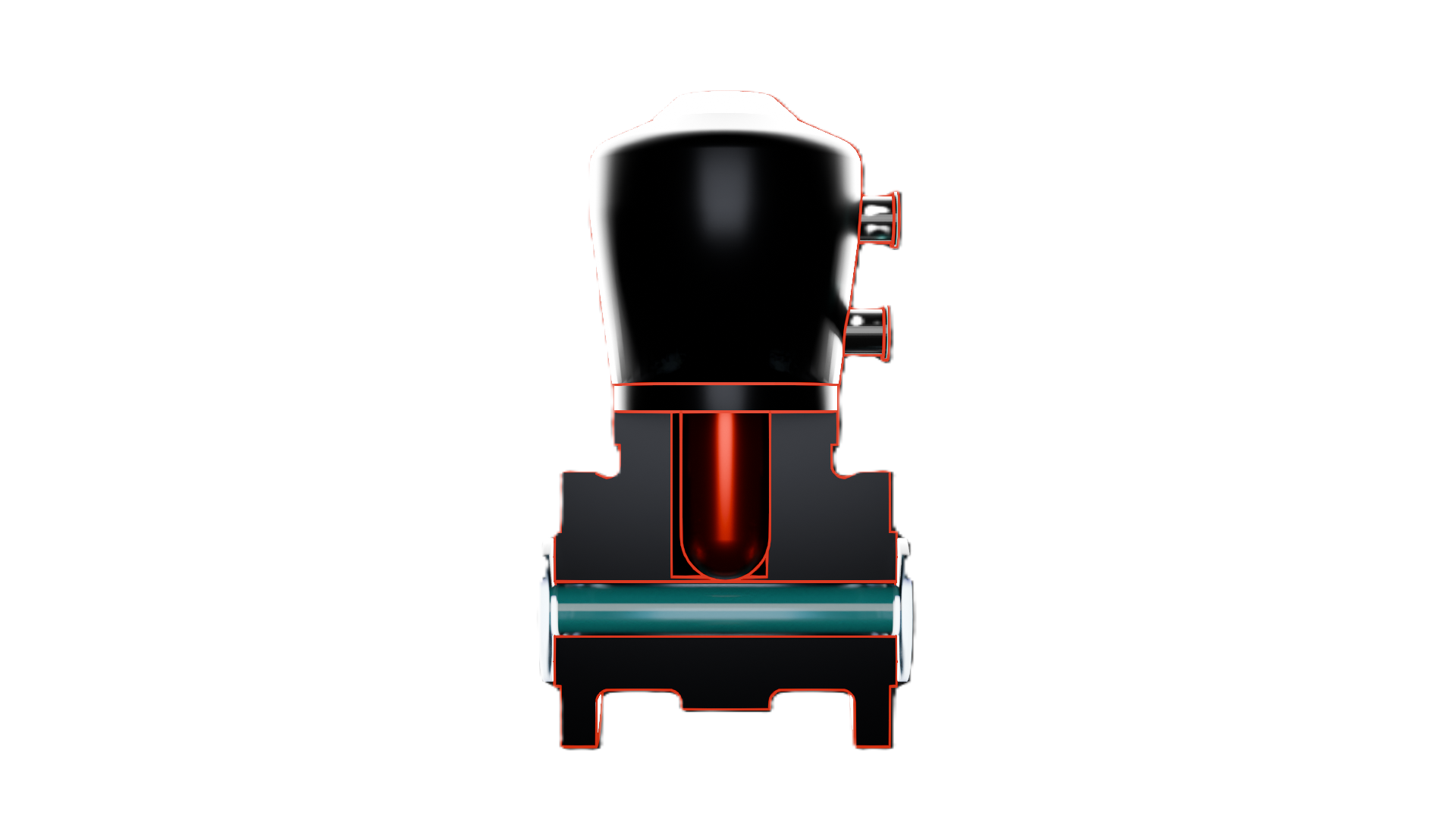
Every valve combines a type (the mechanism that forms the seal) with an actuation method (how it is driven and controlled). They are separate choices, and the second one usually matters more.
Valve type
How the valve physically opens, closes, and seals the flow path.
Diaphragm
A flexible membrane seals against a weir or seat.
Pinch
An external mechanism compresses flexible tubing.
Check
Passive. Allows flow one way, blocks reverse flow.
Ball / butterfly
A rotating element opens or blocks the path.
Actuation method
How the valve is moved and held, and whether it can be controlled.
Manual
Hand-driven by lever or handwheel. No power or air.
Pneumatic
Compressed air drives the actuator. Simple, no electronics.
Electric
A motor positions the valve. Fast, precise, data-rich.
The actuation pairing is what sets response, resolution, and accuracy, not the label on the spec sheet.
Three paths through the same discipline. Start where you are, and go as deep as the process demands.
Start with the mechanisms
What the valves are, and how each one seals.
Compare and specify
How actuation choices change real process outcomes.
Design and operate
Facility, compliance, and continuous-manufacturing decisions.
What is the difference between valve type and valve actuation?
Valve type is the sealing mechanism, such as diaphragm, pinch, check, or ball. Actuation is how the valve is driven: by hand (manual), by compressed air (pneumatic), or by an electric motor. Actuation, more than type, determines response time, position resolution, and control accuracy.
What are the three valve actuation methods?
Manual actuation is hand-driven by a lever or handwheel and needs no utilities, ideal for isolation and sampling points. Pneumatic actuation uses compressed air for simple, reliable remote on/off. Electric actuation uses a motor for fast, precise, continuously adjustable control with real-time position data.
How does valve actuation affect pressure-control accuracy in bioprocessing?
Pneumatic proportional valves modulate pressure by varying air volume, but air compressibility introduces several PSI of variation. Electric actuators with encoder feedback position the stem directly, reaching roughly plus or minus 0.3 PSI. In TFF and chromatography, that accuracy gap is the difference between stable flux and fouling-driven flux decline.
Are pneumatic or electric valves better for bioprocessing?
Neither is universally better. Pneumatic actuation is simple, needs no electronics at the valve, and is inherently safe in flammable atmospheres. Electric actuation responds in milliseconds, holds intermediate positions with encoder feedback, and reports process data. The right choice follows from whether the step needs precise positioning or simple open and close.
Working through valve selection for a specific process?
Talk it through with our engineers