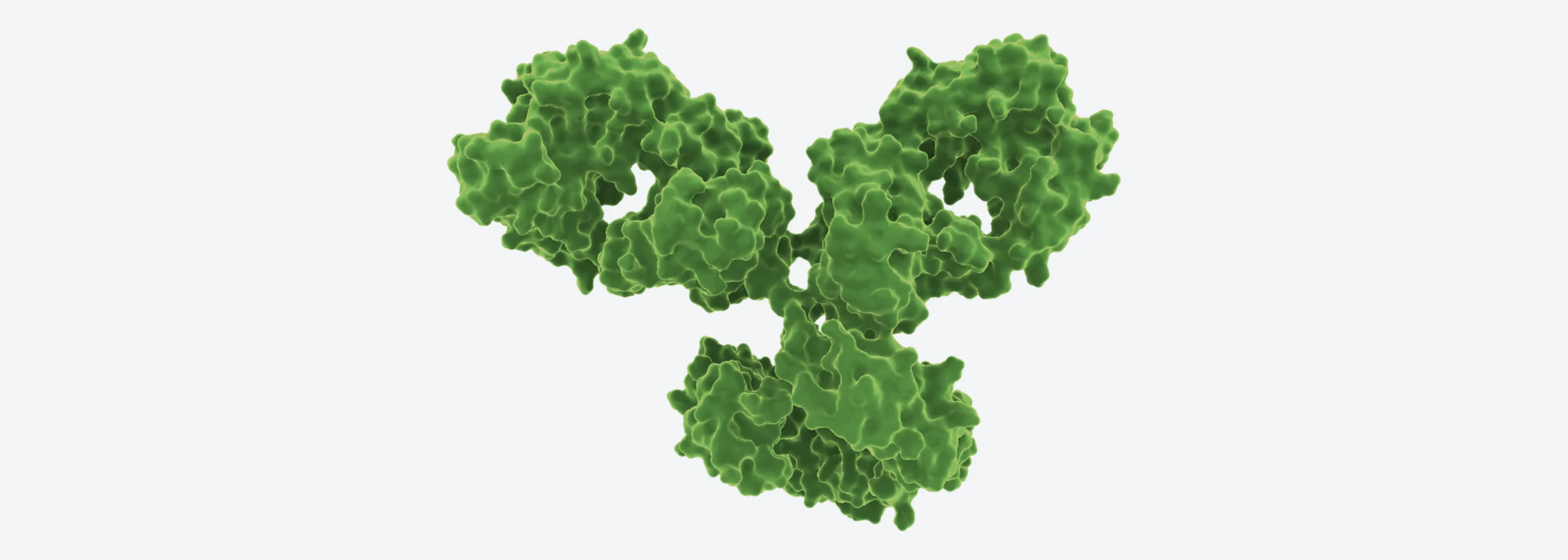
You have carried a monoclonal antibody through capture and polishing, and now it sits as high-value, late-stage material in front of the UF/DF step. This is where you concentrate it, exchange it into the final formulation buffer, and bring it to drug-substance conditions. It is also where a surprising amount of yield and potency quietly disappears. The retentate becomes viscous, transmembrane pressure wanders, subvisible particles appear, and the pump starts to labor before you reach target concentration. None of that is inevitable. Most of it traces back to how the fluid is moved.
For fragile proteins and mAbs, the central truth of tangential flow filtration is that damage accumulates. The retentate is recirculated through the pump hundreds of times over a multi-hour batch, so the quantity that matters is not the shear of a single pass but shear per pass multiplied by pass count. Get the flow engine wrong and you pay that toll hundreds of times over, on your most expensive material.
Three physical mechanisms do most of the harm, and they compound each other. First, cumulative shear dose. Recirculation shear plus air-liquid interfaces drive protein unfolding, aggregation, high-molecular-weight species, and subvisible particles. That is both a yield loss and an immunogenicity risk you then have to clear or prevent. Peristaltic and other high-shear pumps deliver this dose repeatedly, which is why the pump, not the membrane, is often the hidden culprit.
Second, the high-concentration viscosity wall. mAbs self-associate at the concentrations subcutaneous dosing demands, often 150 to 250+ g/L, and viscosity climbs sharply. That means membrane fouling, flux decay, pressure excursions, slow batches, and low recovery in the final step. A pump that stalls on viscous retentate simply cannot reach target concentration, and the formulation is capped by the equipment rather than the molecule.
Third, transmembrane pressure instability. Pumps that pulse swing TMP on every beat, worsening concentration polarization at the membrane wall, accelerating fouling, and stressing product and membrane alike. Add cavitation and entrained air on the suction side, where low-pressure zones collapse vapor bubbles and foam that denature protein right at the product, and you have a flow path that fights you the whole way. These pressures only intensify as fed-batch and perfusion titers rise, sending larger, more concentrated volumes into a UF/DF step that must handle more mass in the same footprint. The industry calls it the purification tsunami. It lands on the final polishing and formulation train.
The load-bearing idea: in batch TFF the retentate passes through the pump hundreds of times. Multiply a small per-pass shear by that pass count and it is still small. Multiply a large one and you have aggregation, HMW species, and lost potency. The lever is shear per pass, not peak flow rate.
Yield is won or lost at the intersection of gentleness, pressure stability, and viscosity headroom, and every percent matters because this material is late-stage and expensive. Concentration polarization causes flux to decay when TMP swings; aggregation removes product you have to filter back out; cavitation and air interfaces attack subvisible-particle quality; and a viscosity-limited pump forces you to stop short of the target. A gentle, stable, air-free flow path protects all four functions of the step at once: concentration, diafiltration, buffer exchange, and final formulation to drug substance.
The competitive landscape has largely addressed the symptoms rather than the cause. The table below frames the difference in approach.
| Approach | What it optimizes | What it leaves open |
|---|---|---|
| Bigger, more stable capture resins | Capacity, alkaline stability, platform throughput at capture | The gentleness of the UF/DF flow path itself |
| Single-pass TFF (fewer passes) | Reducing how many times product sees the pump | Shear per pass and TMP stability within any batch step |
| Development and scale-up screening | Process development workflow, high-throughput screening, scale | The physics of protecting product at the pump |
| Bare low-shear pump component | Pulsation-free flow as a standalone part | A complete, closed, single-use GMP-compatible system |
| Alphinity TFFi + PIXER | Shear per pass, stable TMP, viscosity headroom, air-free path | Delivered as a full single-use system, not a part |
Rivals reduce the number of passes or scale the throughput. Alphinity reduces the damage inside every pass. Both matter, but only one addresses the mechanism that multiplies across a multi-hour recirculation batch.
TFFi maps directly to the primary mAb unit operation: single-use tangential flow filtration for concentration, buffer exchange, and final formulation from 30 mL to 10 L. That is the exact UF/DF work that produces mAb drug substance, delivered in a GMP-compatible, closed single-use format that removes cleaning validation for multiproduct and clinical facilities. It won the Interphex 2026 Best Technology Innovation award for the way it re-engineers this step.
Inside TFFi is PIXER, a positive-displacement single-use diaphragm pump that attacks the cumulative-shear-dose problem head on. Its ultra-low-shear, near-pulseless flow, achieved through multi-diaphragm harmonic cancellation, means every one of the hundreds of recirculation passes stays gentle, protecting the antibody from the aggregation and HMW species that recirculation otherwise multiplies. That same near-pulseless character holds transmembrane pressure stable, reducing the TMP swings and concentration polarization that foul membranes and stress product. Stable TMP is what delivers consistent flux and high recovery across a multi-hour batch.
PIXER also removes the viscosity wall and the cavitation problem in one architecture. It handles viscosity up to 300 cP on gravity-flooded suction, so it keeps moving high-concentration retentate that would stall other pumps, letting formulators push toward the high final concentrations subcutaneous dosing demands. The gravity-flooded, closed, air-free path eliminates the low-pressure zones and air-liquid interfaces that collapse into vapor bubbles and foam, so you protect potency and subvisible-particle quality at the same time you protect yield.
PIXER is membrane-agnostic. Keep the qualified cassette or hollow-fiber membrane and MWCO you have already validated, and add the gentle pump and stable TMP around it. Gentleness comes without re-validating the separation medium.
The control layer is electric, not pneumatic. The whole train runs on 24V DC with no compressed air. VannX motorized single-use diaphragm valves, accurate to plus or minus 0.3 PSI on electric actuation, give closed-loop TMP and flow control electrically, which tightens pressure control and simplifies deployment in facilities without robust plant air. ARTēVA single-use pinch valves and the inline, single-use Buffer Dilution System extend the closed, single-use architecture across diafiltration buffer management and flow isolation, so the concentration, buffer exchange, and formulation train runs as one fully single-use, bioburden-controlled path from start to finish.
Attack the two forces that stop you: cumulative shear dose and pump-limited viscosity. Aggregation builds up because the retentate passes through the pump hundreds of times, so a low shear-per-pass matters more than any single-pass number. Alphinity's PIXER pump inside TFFi delivers ultra-low-shear, near-pulseless flow so each of those hundreds of passes stays gentle, and it moves retentate up to 300 cP on gravity-flooded suction, so it keeps pushing toward the 150 to 250+ g/L targets subcutaneous dosing needs instead of stalling on viscous feed.
Pump choice matters more than most process teams assume, because the retentate is recirculated through the pump repeatedly across a multi-hour batch, multiplying whatever shear each pass delivers. A membrane-agnostic system lets you keep the qualified cassette or hollow fiber and MWCO you already trust, then swap the flow engine for a gentler one. PIXER is a positive-displacement single-use diaphragm pump with multi-diaphragm harmonic cancellation for near-pulseless flow and gravity-flooded suction that eliminates cavitation, so it lowers the shear delivered on every pass without changing your separation medium.
Pulsatile pumps swing TMP on every beat, worsening concentration polarization at the membrane wall and accelerating fouling. Stable TMP is the lever for consistent flux and high recovery. PIXER's near-pulseless flow removes those pressure swings at the source, and pairing TFFi with VannX motorized single-use diaphragm valves, accurate to plus or minus 0.3 PSI on electric 24V DC actuation, gives closed-loop TMP and flow control electrically, so pressure stays flat across the whole batch.
Yes. TFFi is a single-use tangential flow filtration system that covers concentration, diafiltration and final formulation from 30 mL to 10 L in a closed, GMP-compatible single-use flow path, which removes cleaning validation for multiproduct facilities. The whole train runs on 24V DC with no compressed air: PIXER for gentle flow, VannX for electric valve actuation, plus ARTeVA single-use pinch valves and the inline single-use Buffer Dilution System for diafiltration buffer management, so you get a bioburden-controlled closed path that deploys even where plant air is limited.
The physics behind UF/DF: why cumulative shear dose and transmembrane pressure stability decide how much product you keep.
What changes for UF/DF once a cytotoxic payload is attached to the antibody.
Processing proteins or monoclonal antibodies?
Speak to an engineer