The most useful AI I use has never read the internet.
It reads us instead. Our transcripts, our protocols, every decision log the team has ever kept. And that one swap, our data for the world's, is the whole thing. It stopped being a party trick and started being a colleague.
Not a stranger guessing from general knowledge anymore. It had read the lot. It opened my files and changed them while I watched, and it remembered how I work and how the team works without me having to say any of it twice.
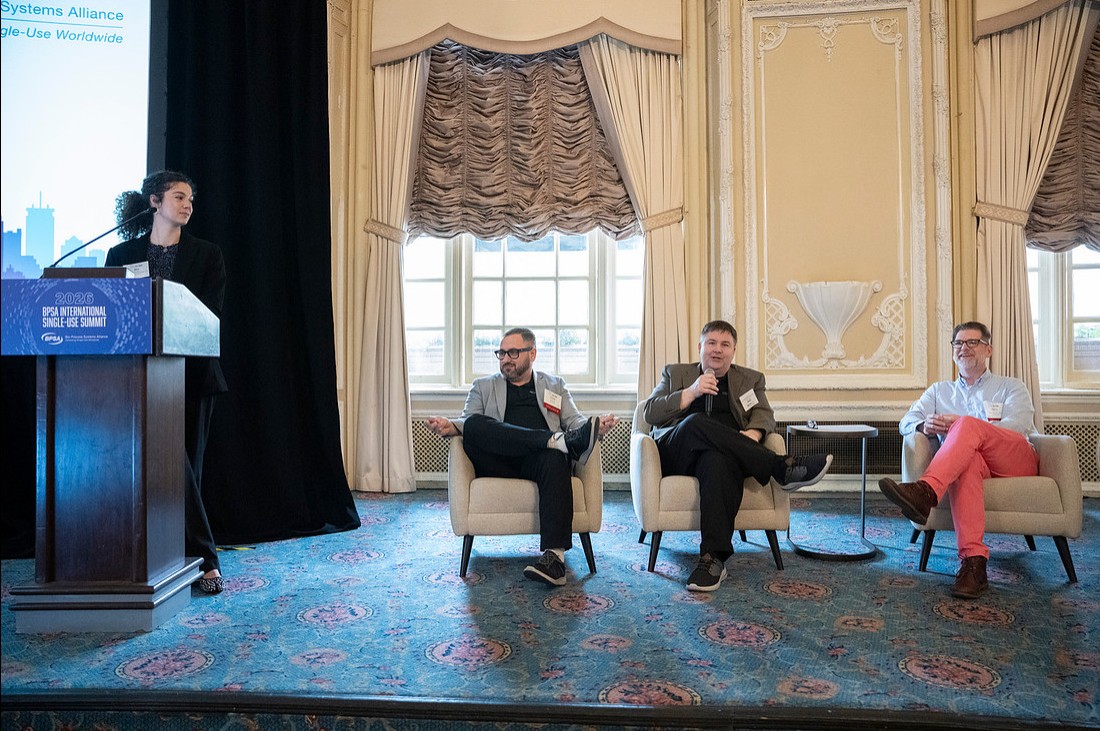
The biggest new technology in twenty years, aimed at the wrong end
BioPlan has tracked this industry for twenty years. This year they called AI the biggest new technology they have ever measured. I believe them.
But look where it landed. Drug discovery got the accelerator, AI-assisted programs are up something like sevenfold in three years. The people who then have to make those drugs got almost none of it.
The wave was built upstream. It breaks on us.
So I stopped asking whether AI was coming to the floor, and started asking the only question that matters: what does it actually do once it gets here.
Verify, then trust
Yes, it hallucinates. Old news.
What nobody warned me about is how good the fake looks. I asked it once for validation guidance and got back a clean, confident answer citing ASTM, ISPE, the FDA. Half of those citations did not exist. They were invented, and they were convincing.
On a factory floor that is the worst kind of wrong. It is the kind nobody stops to check. So I turned the habit around.
What a Tuesday looks like now
Two weeks. That is what a validation campaign used to cost me.
It is about 48 hours now. One Tuesday I drafted a 20-run DOE live on a call and sent it over before I hung up. It ran on the bench overnight. By Wednesday lunchtime the analysis was written and the dataset was just sitting there.
The ten-minute jobs are still ten minutes. Nothing changed there. It is the three-hour jobs that fell off a cliff, down to about thirty, and those are the ones that pile up over a year.
The real shift was not me. It was the team.
The turn was not the day I picked up AI. It was the day everyone else did, each on their own work, quietly catching each other's mistakes.
Five of us now. The automation engineer taught the rest of us the tools and still anchors every technical call. There is a bench engineer over in Estonia running his own rig off nothing but my markdown protocols. One of our cycle-test engineers had never written software in his life and is now committing real test code. And the commercial side is turning out campaigns that, somehow, still sound like us.
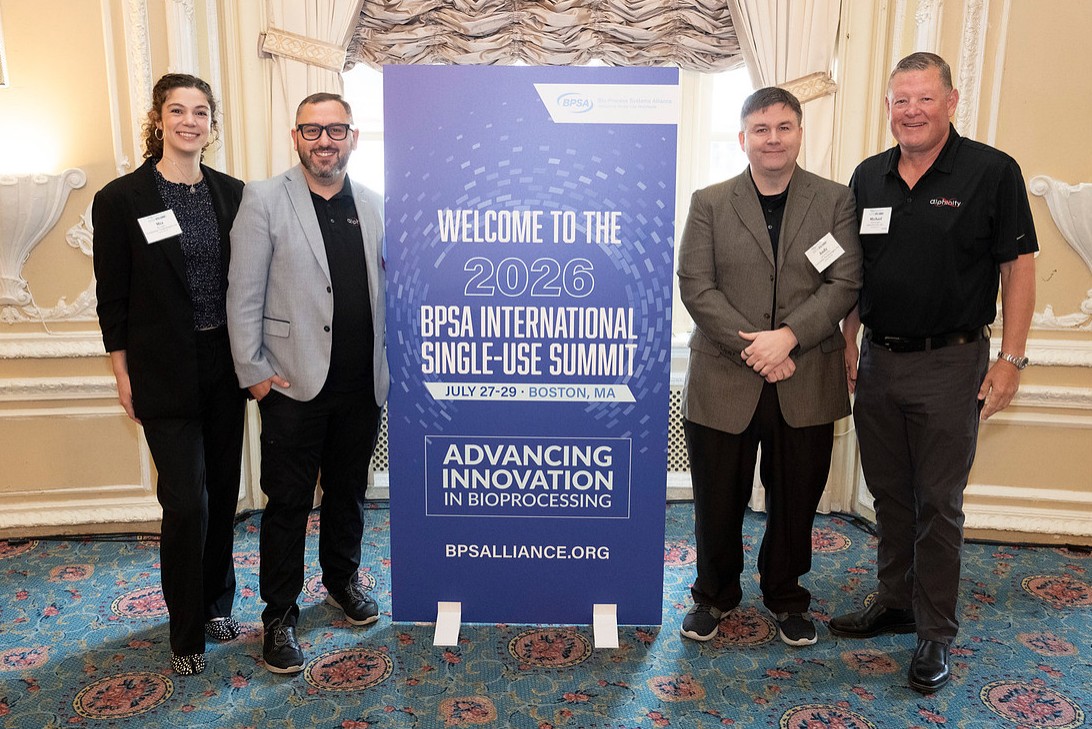
Then Andy took it into the machine
My half was AI in the design and the project management. Andy Robinson, who runs product management over at ConSynSys, took it down a layer, into the automation that actually runs the skid.
His framing stuck with me. The same things that made you choose single-use, being able to move fast, to try something and throw it away if it is wrong, to trust it works every single time, are the reasons he let AI help build the control system too.
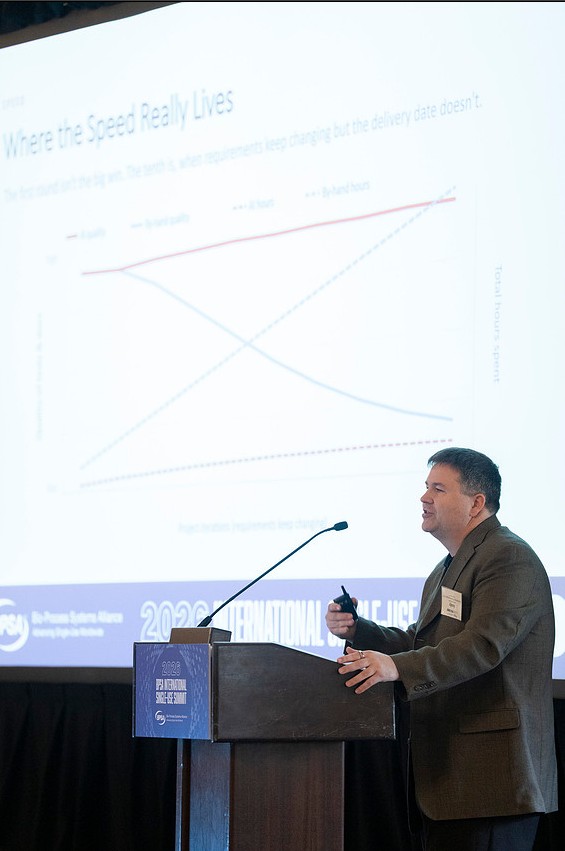
- Speed. The first draft was never the hard part. The tenth is, when the spec keeps moving and the deadline does not. His documentation rewrites itself as the code changes. Around 1,400 pages of it, 271 diagrams, the same standard set across 40 modules, all on one command.
- Courage. Seventeen valves and two pumps had to go in one cramped cabinet with no room for normal wiring. So they bet on CAN bus. Common in cars, almost unheard of on a skid like this. The old way would have been two weeks just to decide it was possible, then a month of interface code, then a nervous meeting about the schedule. They spent a day with AI proving it worked and got on with it.
- Confidence. Be honest with yourself. We write hundred-page test protocols and then only retest the parts we think we touched. Not on Andy's system. The whole suite runs on every release, 12,000 tests in about 11 minutes, and nothing ships unless all of them pass. A full regression that once ate close to two person-years now takes 11 minutes. You are not hoping the rest still works. You know it does.
Where it burned me
It cut both ways.
I acted on a fact that was three weeks stale once and got caught out. The memory is a snapshot, not a live feed, and I forgot that for an afternoon. It is sharp on the fast, showy work and hopeless at the quiet judgment, the when-to-push and when-to-shut-up. So now every miss turns into a written rule, and the same mistake does not get a second run.
The point was never the AI
And it was never one product either.
What we are really building is a set of building blocks, hardware and software that snap together like Lego, so you compose a system around the process instead of bending the process to fit the box.
TFFi™ is the first system out of that framework. Single-use tangential flow filtration, three sizes on one all-electric architecture, proven on our own bench before a customer ever saw it. It will not be the last.
The gap from here is not access. Everybody gets the same tools. The gap is expertise, and the moat is your own data and your own judgment. Small teams get dangerous, in the best possible way. And when it goes wrong, the model did not fail you. You trusted it too much.
The wave is not coming. It is already here. So we build faster, we take more swings, and we test the daylights out of everything, and that is how we stay ready for it. It is also how we keep enabling abundance in medicine.
Does AI design the bioprocess?
No. It is an amplifier for an expert who already knows what good looks like. It speeds up documentation, analysis, and iteration. The engineering judgment and the process design stay with the team.
Why point AI at your own data instead of a general model?
A general model answers from the internet's average. Pointed at your own transcripts, protocols, and records, it answers from how your team actually works, and your proprietary data becomes the advantage, not the model.
What is TFFi™?
Alphinity's single-use tangential flow filtration platform: three working-volume sizes on one all-electric architecture, no instrument air, characterized on Alphinity's own bench. It is the first system built on Alphinity's modular framework of interoperable hardware and software building blocks, not the only one planned.