Applications · Organ perfusion
Machine perfusion keeps donor organs functioning outside the body by recirculating warm, oxygenated perfusate through them. As runs stretch from hours toward days, every part of the fluid path matters: how gently it moves the perfusate, how steadily it holds flow, and how long it stays closed. It is the same problem we solve every day for the most fragile biologics.
INTERPHEX 2026 award winner, Best Technology InnovationWhat does an organ perfusion system need from its fluid path?
Ex vivo machine perfusion pumps a perfusate, often blood-based, through an organ's vasculature at close to physiological temperature, flow and pressure, so the organ stays metabolically active and its function can be assessed. The fluid path has to stay closed and sterile for the whole run, move the perfusate gently enough to limit damage to blood cells, hold flow steady and precisely controllable, allow continuous additions of nutrients and medications, and record every reading so viability can be judged.
The challenge
Clinical devices preserve organs for hours to about a day. Research is pushing toward several days.
Hemolysis and platelet damage build up over a run, and the longer the run, the more they matter.
Liver perfusion alone runs two circuits, arterial and portal, at different flows.
Nutrients, medications and other components are infused into the circuit throughout the run.
Viability is judged from perfusate and flow data, so the run has to be monitored end to end.
What we provide
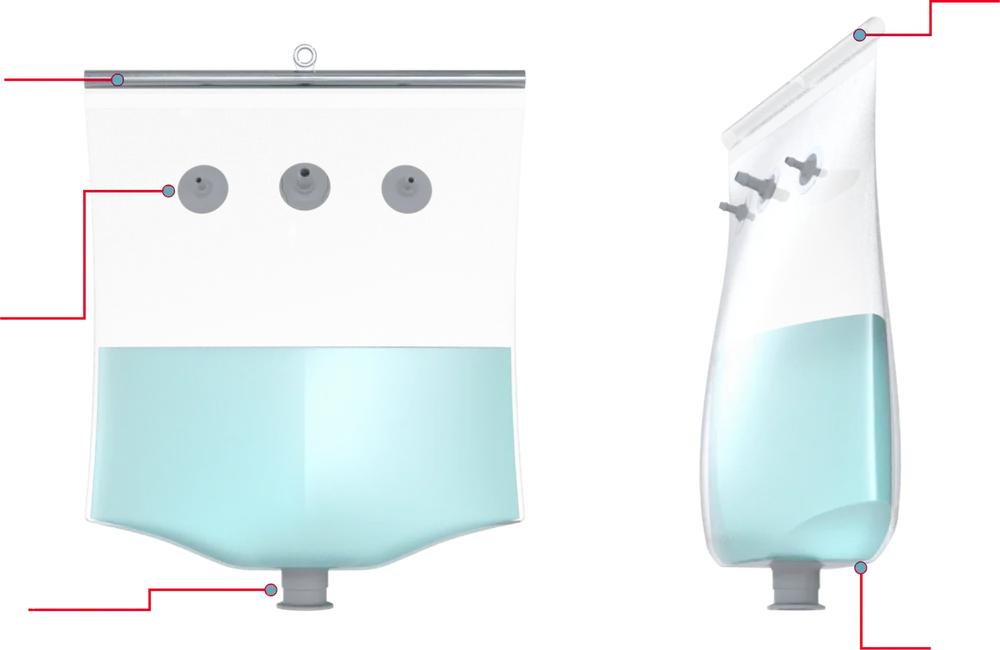
HangerCustom port layoutDrain portHanger sleeveTapered 2.5D base

ProCaaSo®, the cloud-native process control platform from our sister company ConSynSys, runs the perfusion circuit as one coordinated system and turns everything that happens into data the team can see, trust and use.
Pump speed adjusted continuously from live sensor data, with a control loop designed to react in under a second.
Recirculation and additions run as recipes, start to finish, with alerts when the team is needed.
Every flow, pressure, alarm and intervention is recorded, with each reading tied to the step that produced it.
Zero-trust, encrypted, single-tenant cloud. Control runs locally and carries on if the network drops.
ProCaaSo® is developed by our sister company, ConSynSys Technologies.
How we work with you
Organ, circuits, flows, temperature, run length and additions.
Custom reservoirs and a circuit sized to your organ and model.
Fast design turns as your program learns.
One architecture from research rigs to larger programs.
Why Alphinity
Our equipment was designed for viral vectors, mRNA and cell therapies: products that lose potency when they are pumped too hard, squeezed through tubing or exposed to cavitation. The same principles, a flooded inlet, steady flow, no crushed tubing and a closed single-use path, are what a perfusate needs over a long run.
Our TFFi™ system, built on the same pump and fluid path, won Best Technology Innovation at INTERPHEX 2026.

FAQ
Machine perfusion keeps a donor organ functioning outside the body by pumping a preservation solution, called perfusate, through its blood vessels. Unlike static cold storage on ice, the organ is supplied with oxygen and nutrients, which allows its function to be maintained and assessed before transplantation.
Normothermic machine perfusion recirculates warm, oxygenated perfusate, often blood-based, through an organ at close to body temperature. The organ stays metabolically active, so clinicians and researchers can monitor its function during the run. Liver perfusion, for example, typically uses two circuits, with arterial flows around 0.2 to 0.3 L/min and portal flows around 0.8 to 1.25 L/min.
Clinical machine perfusion devices typically preserve organs for several hours up to about a day. In research, longer runs are being explored: published studies have perfused human kidneys for up to four days at subnormothermic temperature, and preclinical work has extended preservation toward a week.
The pump moves every drop of perfusate through the circuit, continuously, for the whole run. Pump design can affect hemolysis, platelets and inflammatory markers, and hemolysis becomes more of a problem the longer the run lasts. A gentle, low-shear pump that does not squeeze tubing, with steady and precisely controllable flow, reduces stress on the perfusate.
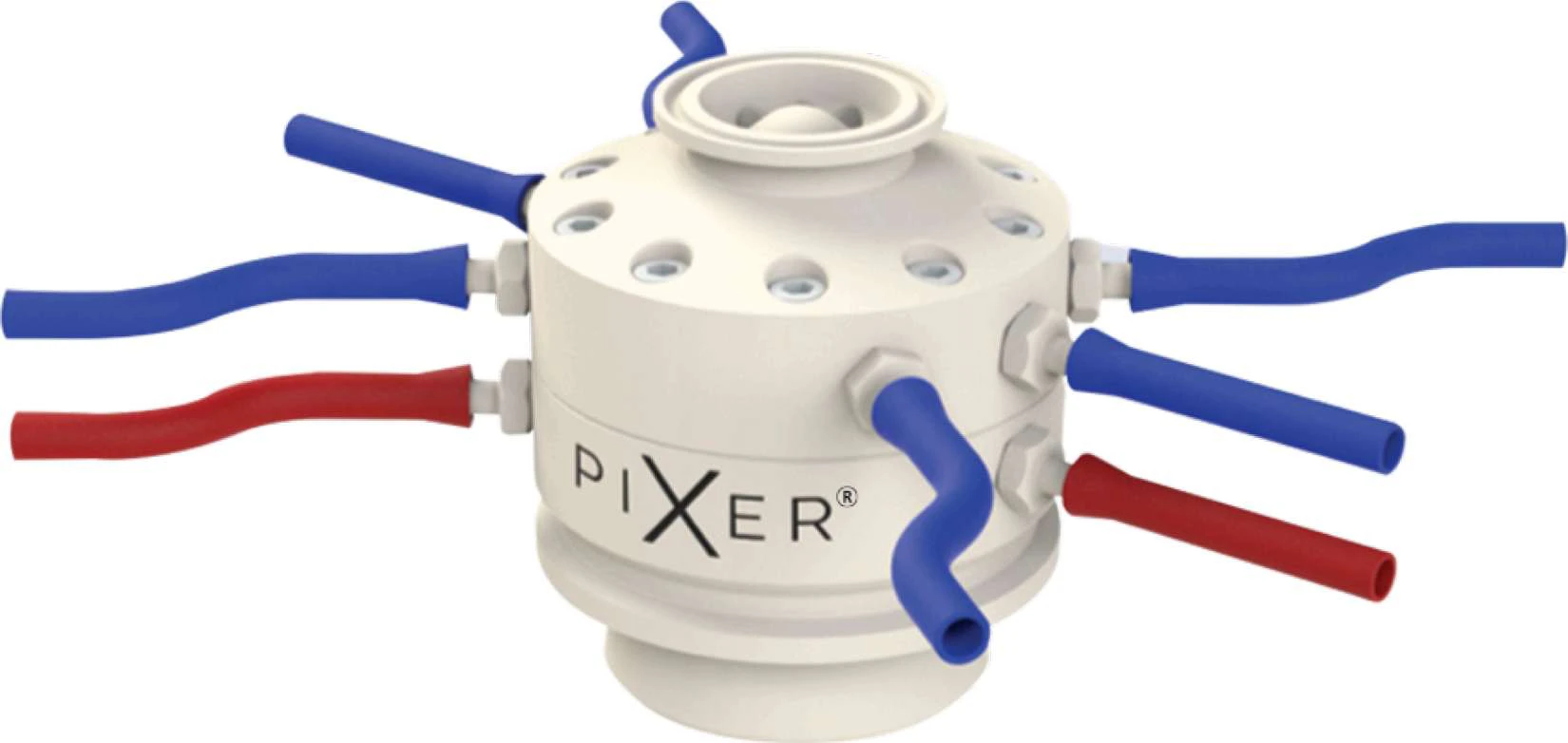
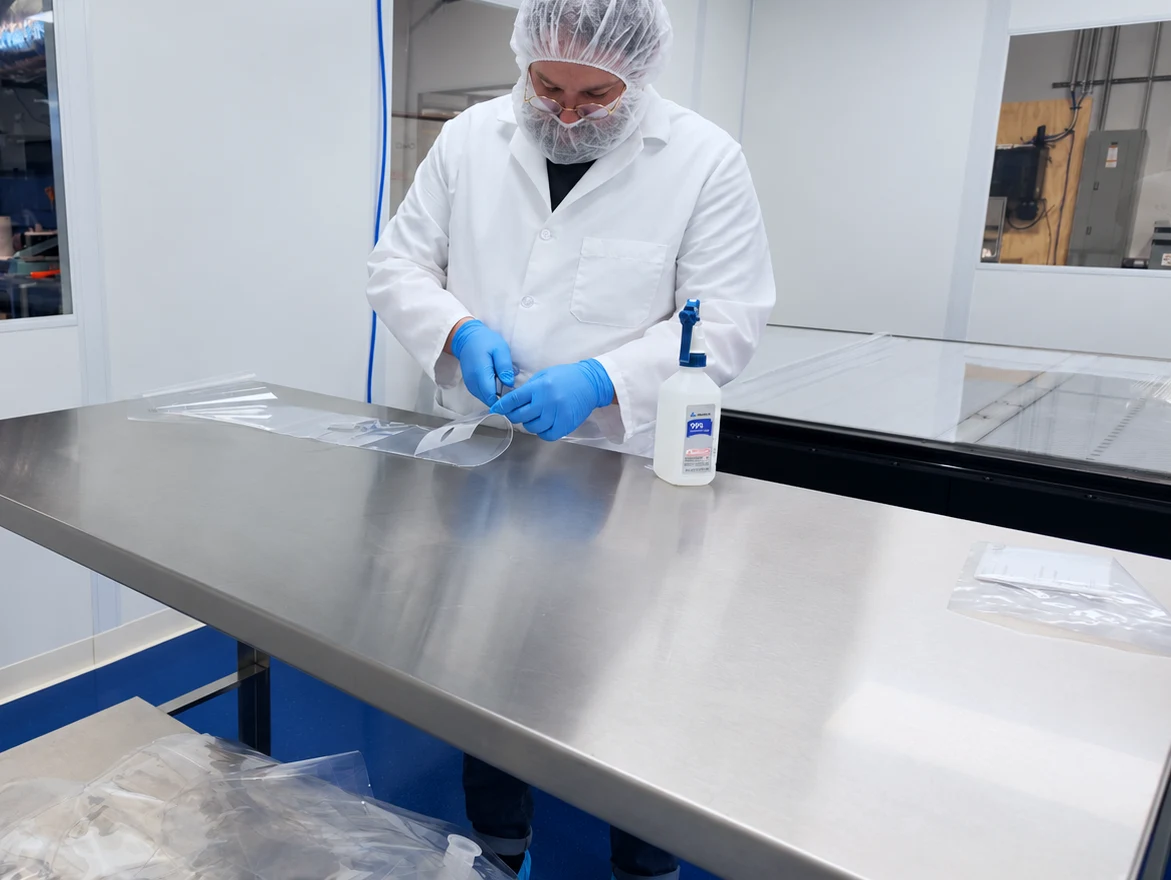
Yes. Alphinity designs custom single-use reservoirs and bags in its own cleanroom, on bag technology protected by five granted patents, together with PIXER low-shear diaphragm pumps and closed-loop control from sister company ConSynSys. Equipment is available to research and development programs. It is not approved for clinical use, and Alphinity works with partners on the regulatory pathway for clinical applications.
Related: Single-use bags · Artificial womb and ex utero fluid systems · PIXER® pumps
Published research: Pushing the boundaries of innovation: the potential of ex vivo organ perfusion from an interdisciplinary point of view. PMC10602690
A cell-free nutrient-supplemented perfusate allows four-day ex vivo metabolic preservation of human kidneys. Nature Communications, 2024. nature.com
Effect of centrifugal and roller pumps on blood and myocardial structure in a normothermic machine-perfused ex vivo porcine heart model. Scandinavian Cardiovascular Journal, 2025. tandfonline.com

Get Started
Tell us about the organ, the circuits, the flows and how long the run has to last. We will help design its fluid path.
For research and development programs. Not approved for clinical use. We work with partners on the regulatory pathway for clinical applications.